Know what’s under your yard before the project begins

SafeLine provides specialist utility locating services to help take your plans to action safely.

Serving Virginia and Washington, DC

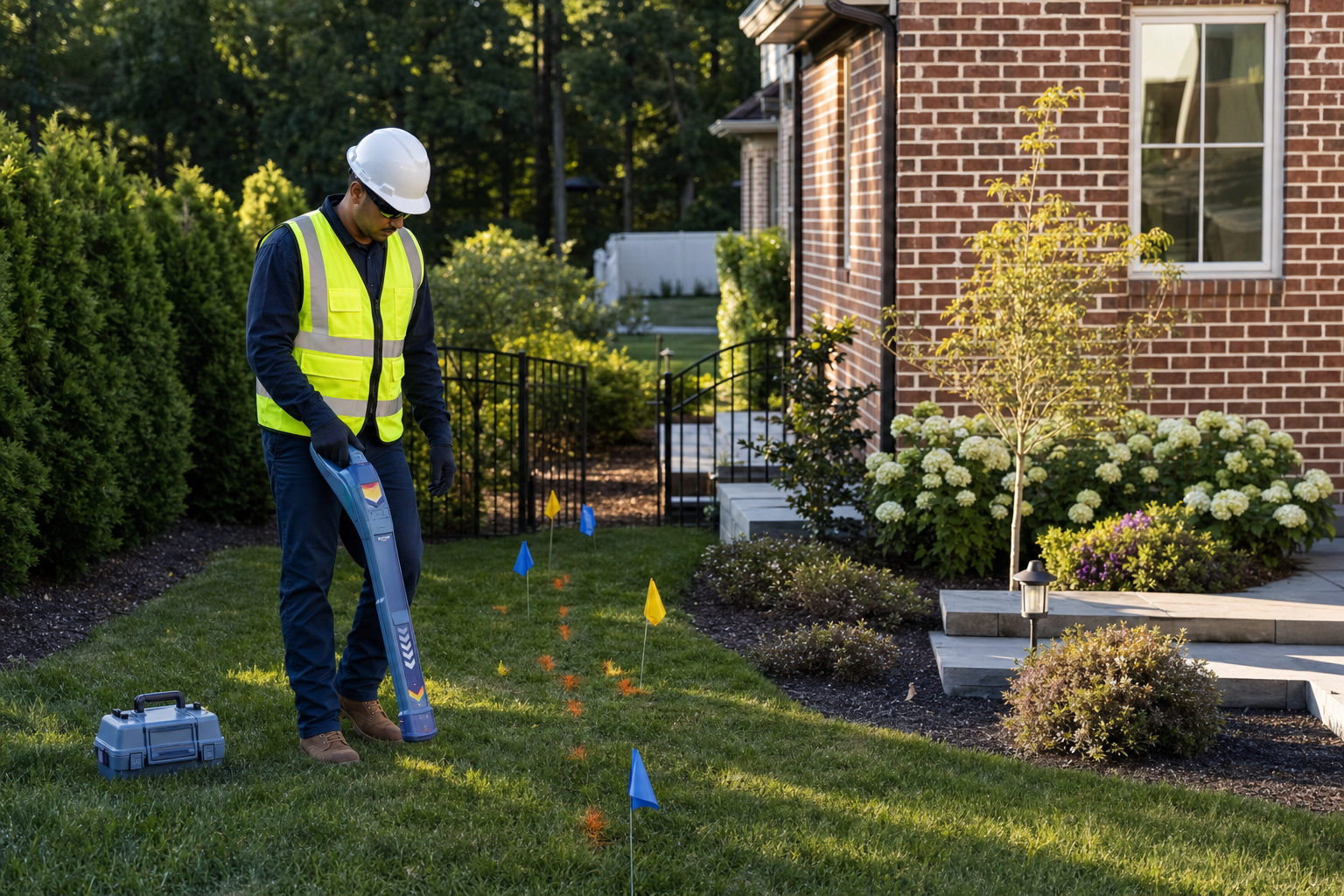
A utility locating specialist tracing marked underground utilities with electromagnetic locating equipment beside a home

Common projects

Locate first. Protect the plan.

Private utilities can cross the exact area planned for a pool, patio, addition, fence, landscape feature, drainage project, or other improvement. A private locating visit focuses on the defined work area and the property-owned services that may not appear in the public 811 response.

01

Pool or patio

Project question
Which private services may cross the excavation footprint?
Investigation response
Define the footprint and investigate the utilities related to that area.
Useful record
Field findings explained in the context of the planned work.

02

Addition or outbuilding

Project question
Could service lines conflict with foundations, grading, or access?
Investigation response
Review available records and investigate the defined construction area.
Useful record
Documented findings and any recommended next verification step.

03

Landscaping or drainage

Project question
What irrigation, lighting, communications, or other private lines may be present?
Investigation response
Scope the beds, trench, boring, or grading area before work begins.
Useful record
Useful field information that complements the required 811 ticket.

811 and private lines

Public marking and private locating are both part of digging safely

An 811 ticket notifies participating utilities and remains required before digging. Privately owned lines on the property—such as irrigation, service beyond a meter, power to a shed, pet fencing, propane, or septic components—may not be included in that response.

Private utility locating addresses the defined project area without replacing the public service.

Start with 811
Submit the required ticket and follow the instructions and timing for the project jurisdiction.
Define your project
Identify the work footprint, planned disturbance, access, and any known private systems.
Investigate private lines
Scope a visit when property-owned infrastructure may cross the work area.
Use the findings carefully
Treat markings as planning information, observe safe-digging requirements, and verify where needed.

The visit

What a locating visit looks like

A specialist reviews the planned work, investigates the defined area, communicates the findings, and gives you useful information before the project begins.

  1. 01Confirm the project

    Review the address, planned work, and area of concern.

  2. 02Investigate the site

    Use appropriate field methods in the defined area.

  3. 03Mark and explain

    Communicate what was found in plain language.

  4. 04Plan with confidence

    Use the findings to protect people, property, and the project.

Questions

Straight answers before the visit

No pressure and no invented pricing or turnaround claims.

01What can a locating visit cover?

A defined project area and privately owned utilities related to the planned work. SafeLine confirms the investigation scope before the visit.

02Do I still need to contact 811?

Yes. An 811 ticket is still legally required before digging. Public one-call marking and private utility locating answer different questions.

03How should I prepare?

Have the project address, planned work, and area of concern ready so the investigation can be scoped clearly.

04What do the markings mean?

They communicate field findings for your defined project. SafeLine explains the findings without promising exact location or guaranteed depth.

Plan a Subsurface Investigation

Plan the locating visit before the home project begins.