Private utility designation with a defensible record

Specialist utility designation of the highest standard with engineering-level documentation for projects that call for pre-construction intelligence.

Serving Virginia and Washington, DC

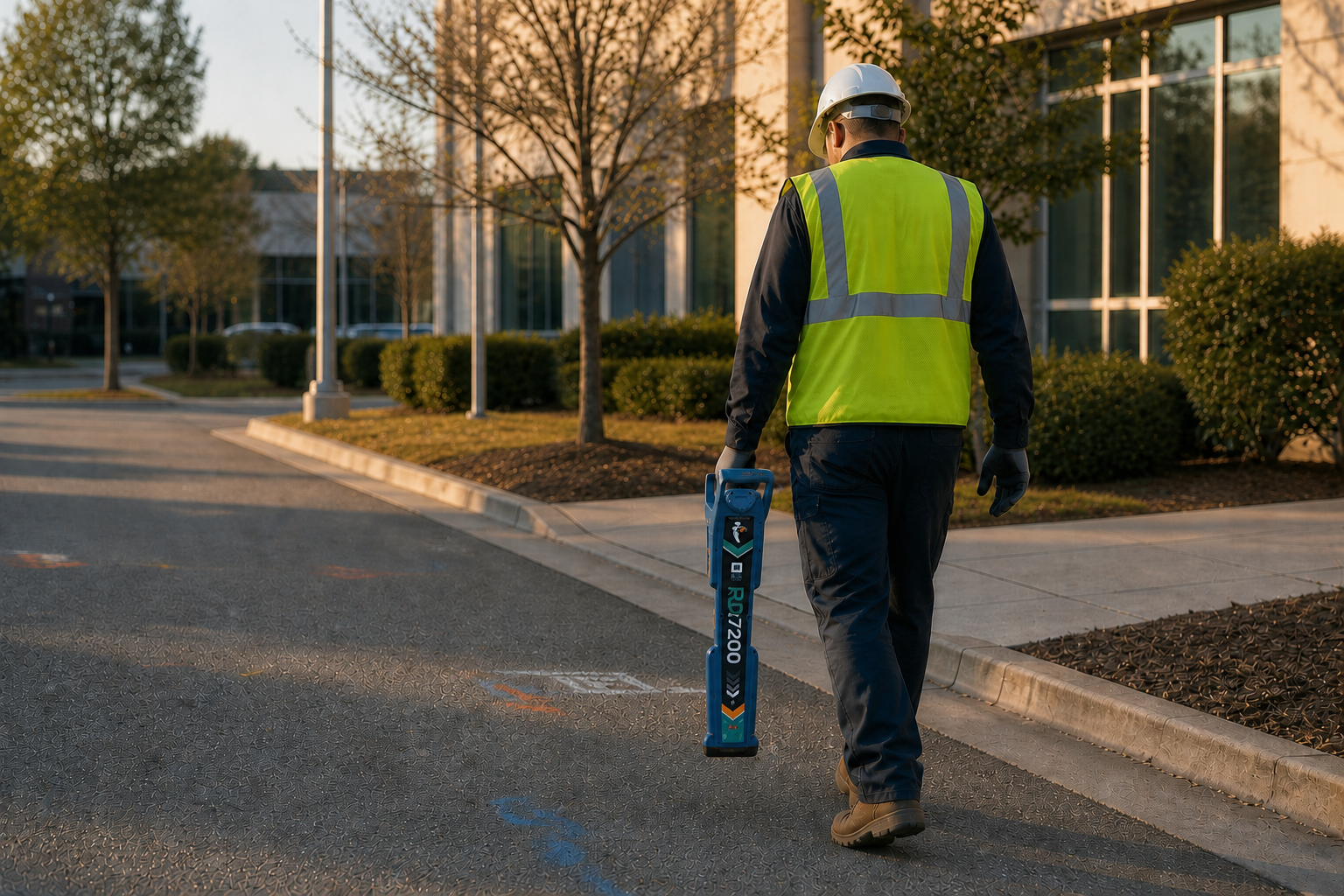
A utility locating specialist using electromagnetic locating equipment beside marked underground utility routes

Scope

What private designation covers

Privately owned subsurface lines on the project site — designated in the field and delivered as documentation built as a defensible record for pre-construction decisions.

Public marking and private designation answer different questions.

Compare private locating and 811

Utility types located

  • Electrical
  • Gas
  • Water
  • Sewer
  • Fiber-optic
  • Telecommunications
  • Irrigation locating
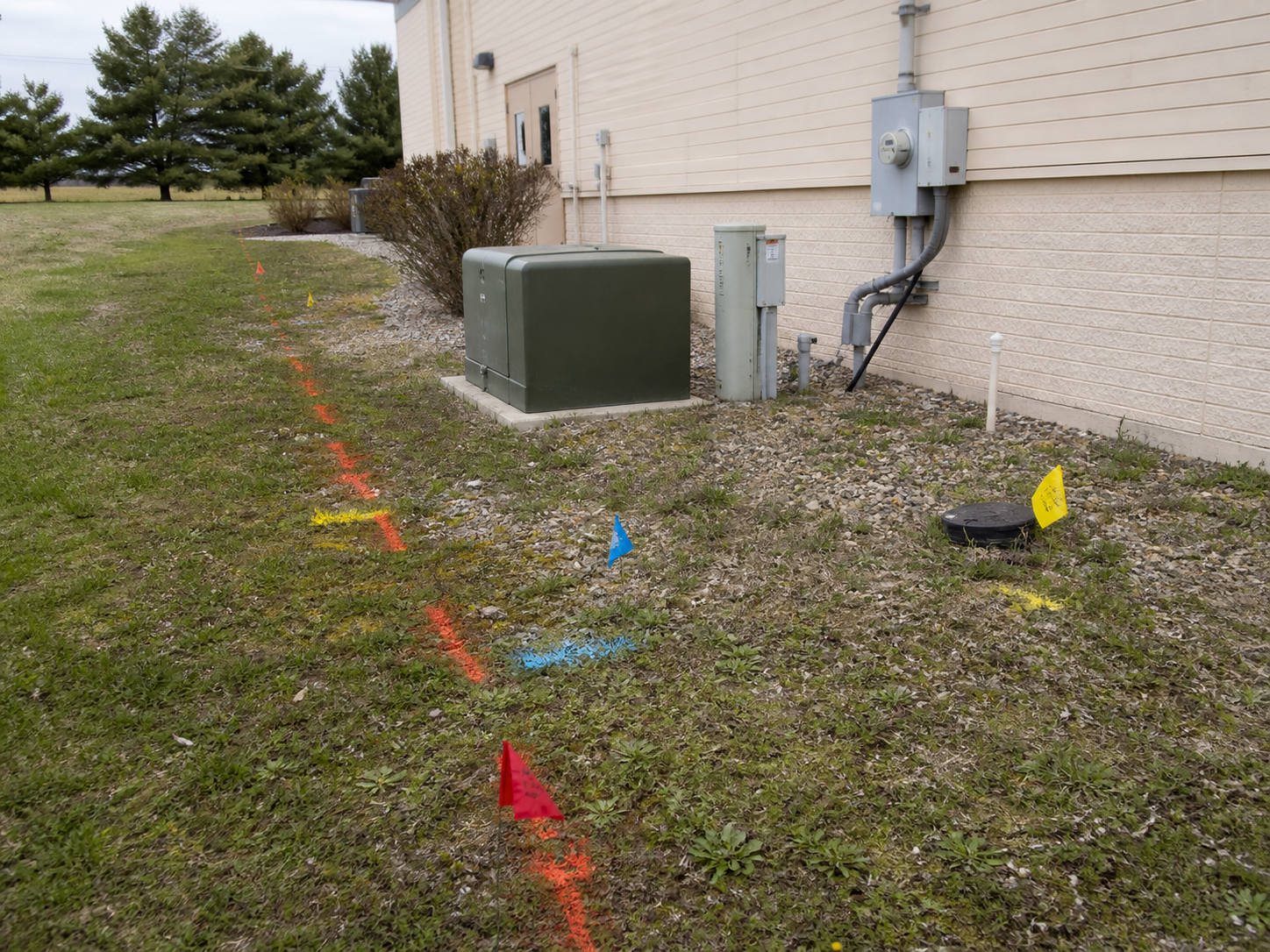
Private electrical, telecommunications, and site utility infrastructure connected by field markings across a defined project area
Private systems within the defined project area

Scope ledger

Define the project before field work begins

Private utility locating is most useful when the investigation area, planned disturbance, available records, and required output are clear. Scope controls which field methods are appropriate and how findings should be documented.

Project inputs
Address, planned work, area of concern, access constraints, and available utility or site plans.
Infrastructure considered
Privately owned electrical, gas, water, sewer, fiber-optic, telecommunications, and irrigation infrastructure within the defined scope.
Field output
Surface designation and interpreted findings positioned for the project, with confidence stated rather than implied certainty.
Documentation
The record may include utility maps, KMZ files, congestion context, and verification recommendations according to project need.

Process

Scope, investigate, classify, document

A methodical investigation flow with 'ASCE 38-aligned methodology' as its standards frame — no step-count or turnaround-time promises.

  1. 01Scope

    Understand the site, intended work, and decisions the project team needs to make.

  2. 02Investigate

    Apply the field methods appropriate to the site and the infrastructure in question.

  3. 03Classify

    State confidence in findings instead of presenting uncertainty as exactness.

  4. 04Document

    Deliver a defensible record in formats that fit contractor and engineering workflows.

See the full process

Honest certainty

Confidence-classified findings

Every investigation is delivered with confidence-classified findings and RTK GPS precision. Findings are classified rather than presented as exact locations or guaranteed depth — data, documentation, and risk reduction for schedule-conscious teams.

  • Field evidence

    Located and observed directly in the field.

  • Record evidence

    Correlated with records and surface indications.

  • Verification recommended

    Flagged where further verification protects the decision.

Utility mapping and documentation

Deliverables

Deliverables for contractor and engineering workflows

Documentation already prepared and structured for contractor and engineering firm workflows — from KMZ files to pre-construction intelligence reports with congestion mapping and verification recommendations.

  • 01KMZ files
  • 02Pre-construction intelligence reports
  • 03Congestion mapping
  • 04Verification recommendations

Designation questions

What does private designation include?

It addresses privately owned subsurface lines on the project site, designated in the field and delivered as documentation built as a defensible record for pre-construction decisions.

How should the site be prepared?

Share available plans, access limits, and the planned work before the investigation. Commercial leads should own project planning, safety, or excavation responsibility.

Does this replace an 811 ticket?

No. An 811 ticket is still legally required before digging. Public marking and private designation answer different questions.

Is exact depth guaranteed?

No. Findings are confidence-classified rather than presented as exact locations or guaranteed depth.

Project scenarios

Private locating answers a defined project question

The same field service supports different decisions depending on ownership, planned work, and the record the team needs.

01

Commercial excavation

Project question
Which privately owned lines may conflict with the planned disturbance?
Investigation response
Investigate the defined work area with methods matched to the known and suspected infrastructure.
Useful record
Field designation plus documentation the project team can use during pre-construction coordination.

02

Residential improvement

Project question
What private services may cross a pool, patio, addition, or landscaping area?
Investigation response
Review the project footprint and investigate privately owned lines related to the work.
Useful record
Plain-language findings that complement, but do not replace, the required 811 ticket.

03

Congested facility site

Project question
Where does the available evidence leave uncertainty or require verification?
Investigation response
Combine field designation with careful interpretation and confidence classification.
Useful record
Mapped findings and verification recommendations for the decisions that follow.

Plan a Subsurface Investigation

Invite a project-specific scoping conversation.