
A methodical investigation, documented at every step
How the investigation and documentation process works, from scoping through delivered findings.
ASCE 38-aligned methodology

Investigation process
From project scope to delivered record
The method serves the decision. It is not a commodity equipment checklist or a promise that subsurface uncertainty can be eliminated.
01Scope
Understand the site, intended work, and decisions the project team needs to make.
02Investigate
Apply field methods appropriate to the site and infrastructure in question.
03Classify
State confidence in findings instead of presenting uncertainty as exactness.
04Document
Deliver a defensible record in formats that fit downstream workflows.
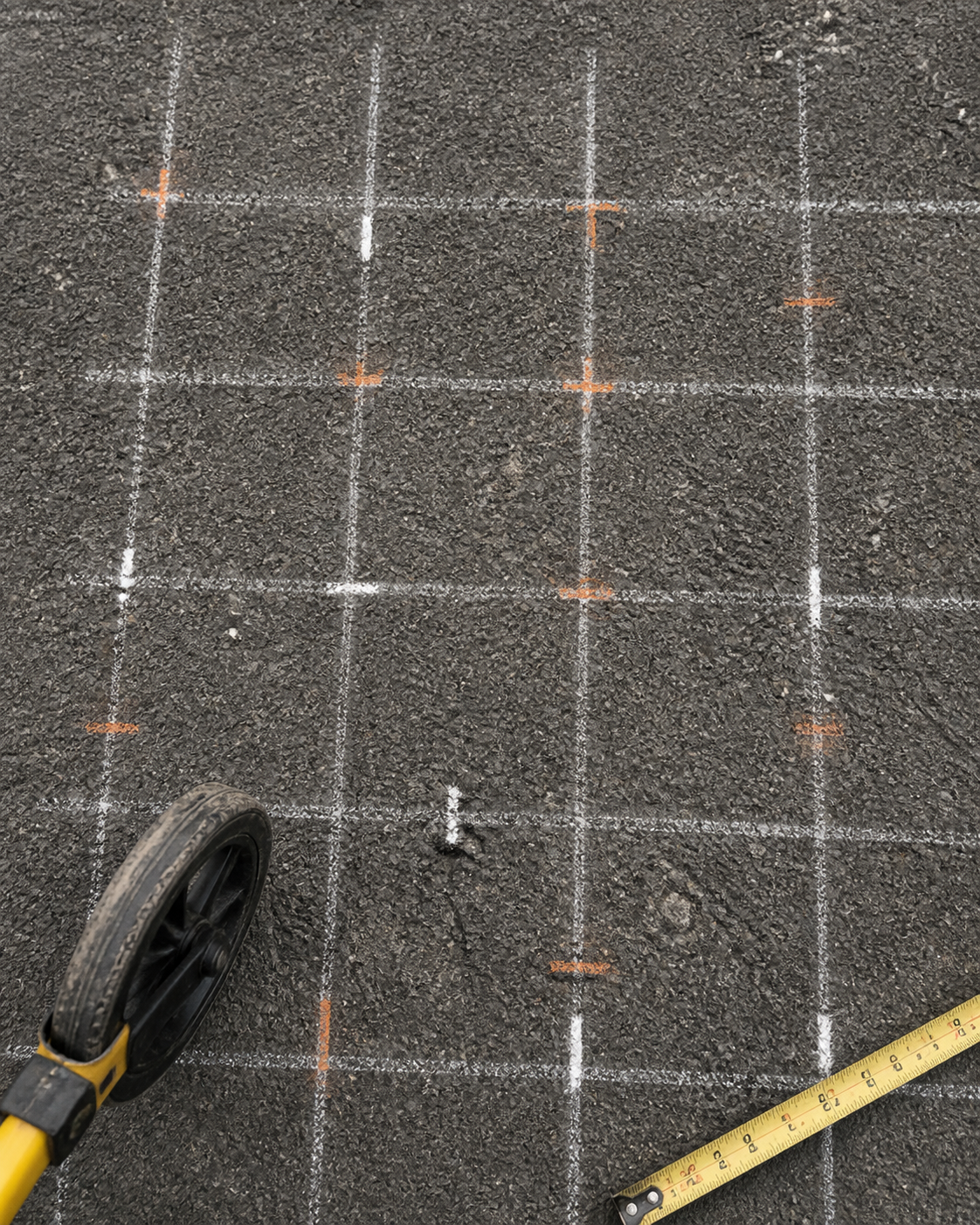
Field methods
Precision in service of useful documentation
RTK GPS precision and ASCE 38-aligned methodology support the record. Findings are interpreted and classified, never presented as guaranteed depth or exact location.
Field evidence
Located and observed directly in the field.
Record evidence
Correlated with records and surface indications.
Verification recommended
Flagged where further verification protects the decision.
Deliverables
Formats prepared for the way teams work
KMZ files through pre-construction intelligence reports, congestion mapping, utility maps, and verification recommendations.
- 01KMZ files
- 02Pre-construction intelligence reports
- 03Congestion mapping
- 04Verification recommendations
- 05Utility maps
Decision checkpoints
What changes from scope to delivered record
The investigation becomes more useful when each handoff answers a specific question and keeps limitations visible.
- Scope checkpoint
- Is the work area defined, are ownership questions understood, and is the desired decision clear?
- Field checkpoint
- Which methods fit the site, where is access limited, and what evidence was actually observed?
- Interpretation checkpoint
- How much confidence can each finding bear, and where does uncertainty remain?
- Delivery checkpoint
- Which format will the recipient use, and what verification recommendation belongs with it?
Prepare
Make the first conversation productive
Homeowners should have a defined project address and planned work. Commercial leads should own project planning, safety, or excavation responsibility and share available site information.
- Project address
- Planned work
- Area of concern
- Available plans
- Access constraints
- Decision the findings must support
Plan a Subsurface Investigation
Scope the project, site, and documentation needs with SafeLine.
Virginia and Washington, DC