
.
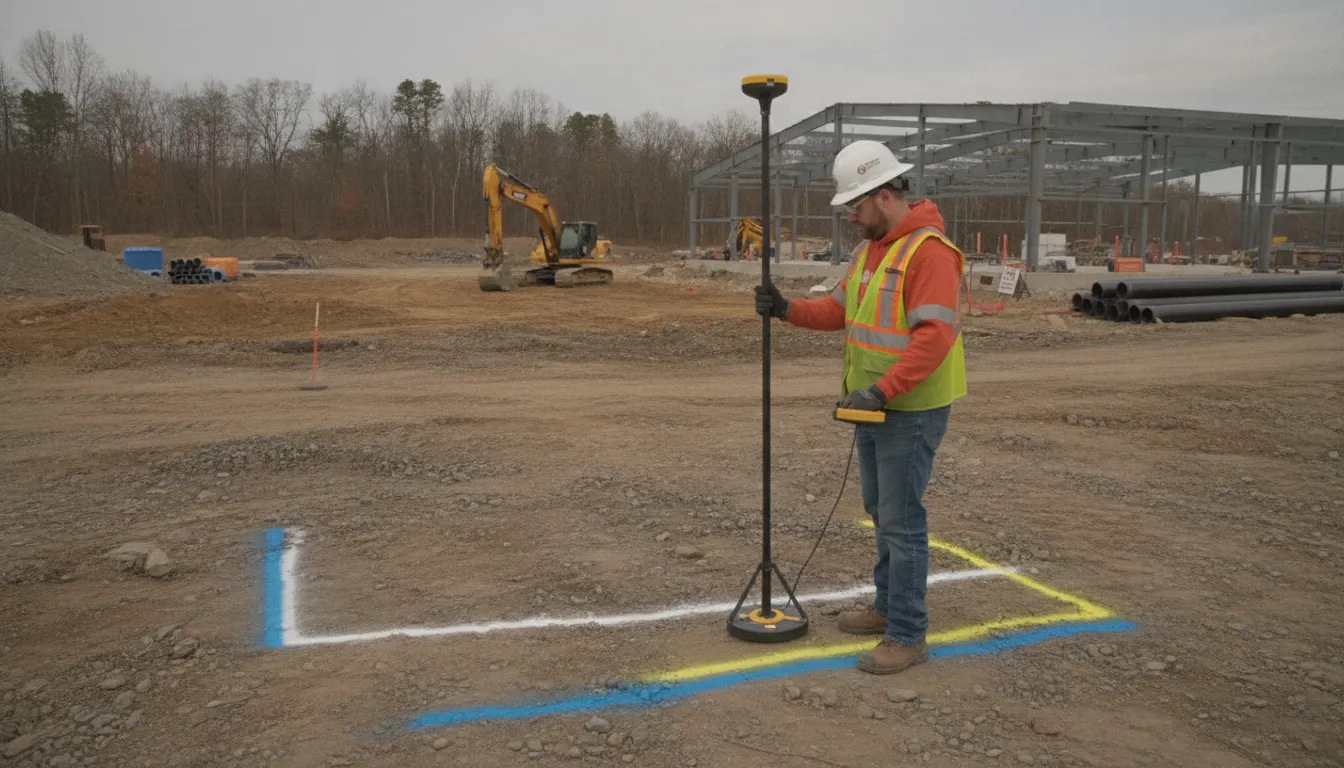
A fresh 811 ticket can make a work area look ready for excavation. Public marks are not the same as a complete map of the parcel. The ticket generally addresses utility facilities owned and maintained by participating operators. Marking may stop at a meter, point of service, or property boundary. Lines installed by a property owner or serving an outbuilding, irrigation system, pool, landscape lighting, or private communications network may fall outside that response. For background on planning a private locate, see SafeLine's private utility locating service guide.
Request a private utility locating quote from SafeLine
So, what does 811 not cover? It may not identify privately owned or abandoned utilities beyond the public utility boundary, including private electric, gas, water, sewer, communications, and irrigation lines. Call 811 first, then consider private utility locating when your excavation could encounter assets the public ticket does not address.
For an excavator, the next step is to compare the ticket's scope with the actual work limits, site history, and visible utility features before choosing a digging plan. That starts with understanding exactly what the 811 process is designed to cover.
What Is 811 and What Does It Cover?
811 is the public utility notification service you contact before digging. It coordinates requests for participating utility operators to mark the public underground facilities they own and maintain. For that reason, 811 remains the first step on every excavation plan, even when the work is entirely on private property.
The marks you receive usually represent the utility network up to a meter, point of service, or property boundary. That boundary is not identical for every utility or jurisdiction, so do not treat a completed ticket as a complete map of the parcel. In practical terms, 811 helps identify the public infrastructure that may cross or serve the work area. It does not necessarily identify every line installed by a property owner, contractor, or private utility operator.
- What 811 typically covers: Public electric, gas, water, communications, and other facilities maintained by participating utility companies.
- Where coverage may end: Often at a meter, point of service, or property boundary, depending on the utility and local process.
- What a clear ticket does not prove: That every buried line, abandoned facility, or private connection on the property has been located.
That is the practical answer to the question, "what does 811 not cover?" It may not cover private irrigation or gas grill lines. It may also miss electrical feeds to garages or outbuildings, pool equipment, landscape lighting, private communications, private water or sewer laterals, and abandoned utilities. These assets can still be inside the planned excavation area and may not appear in the public marks.
After the 811 response arrives, review the actual work limits rather than assuming the ticket covers the whole site. If the project extends beyond public utility facilities, arrange private utility locating to investigate the remaining area. Private locating supplements 811; it does not replace the public notification process or local safe-dig requirements. For a fuller overview of the distinction, see SafeLine's private utility locating service guide.
What Does 811 Not Cover on a Private Site?
What does 811 not cover? In practical terms, public 811 marking usually follows ownership. Utility companies or public operators generally identify the facilities they own and maintain, often to a meter, point of service, or property boundary. The exact stopping point can vary by utility and jurisdiction.
Lines installed, owned, or maintained by a property owner or private facility may not be part of the public ticket. That does not make the 811 response unhelpful. It means the marks should be treated as one layer of site information, not confirmation that every buried line on the parcel has been identified.
| Public 811 marking | Private lines that may not be marked |
|---|---|
| Utility-owned electric, gas, water, sewer, communications, or fiber facilities within the ticket area. | Private electrical feeds running to a garage, shed, barn, or other outbuilding. |
| Public facilities that connect to a property at a meter, point of service, or boundary. | Private water or sewer laterals between a building and the public connection. |
| Lines operated and maintained by participating public utilities. | Irrigation, pool equipment lines, landscape lighting, and gas grill lines. |
| Facilities reported by the utility members notified on the 811 ticket. | Private communications lines, including site-specific fiber or other low-voltage systems. |
| Active public infrastructure within the defined work area. | Abandoned utilities or older lines with no current public utility owner. |
For an excavator, the important question is not only whether paint is visible. Review where the public marks stop, then look for service routes leading from buildings, equipment, driveways, pools, irrigation controls, and outbuildings. A line can be outside the public utility's ownership even when it carries a similar service, such as electricity, gas, water, or communications.
Private utility locating supplements the 811 process by investigating these site-specific assets and documenting their apparent routes. Depending on the conditions and utility type, a locator may use electromagnetic (EM) locating for conductive lines and Ground Penetrating Radar (GPR) to support detection of metallic and non-metallic infrastructure. Field markings, photos, mapping, and a written report can give the project team clearer information for planning the excavation.
Because ownership records and site conditions differ, use cautious wording: a line may not be marked by 811. But its absence from the public marks is not proof that it is absent from the ground. Keep the 811 ticket and local safe-dig requirements in place, and arrange private locating when work could intersect privately owned or undocumented utilities.
Why Excavators Need More Than an 811 Ticket
A clear 811 response is an important first step, but it is not a whole-property map. The public ticket generally addresses utility facilities owned and maintained by participating operators. Marking often ends at a meter, point of service, or property boundary, although the exact boundary can vary by utility and jurisdiction.
For an excavator, that distinction matters as soon as the work area extends beyond the public right of way or into a developed parcel. A trench for a new service, footing, drainage improvement, tank, addition, or site utility may cross areas where privately owned lines are not included in the 811 response. Irrigation, landscape lighting, pool equipment, private communications, utility feeds to an outbuilding, and private water or sewer laterals can remain outside the public marks. Abandoned lines may also be present.
Review the actual work area, not just the ticket status
Before mobilizing, compare the ticket limits with the excavation plan. Walk the full work area and look for service routes, meters, buildings, outbuildings, lighting, irrigation controls, cleanouts, drainage features, and other signs of underground infrastructure. Confirm that the marked corridor matches the planned limits of disturbance. A ticket marked clear outside the proposed excavation does not answer what may be buried inside the parcel.
This is the practical answer to what does 811 not cover: 811 does not necessarily identify every privately owned or previously installed line that could affect the dig. It also does not replace the crew's responsibility to understand the site and follow applicable local safe-dig procedures. Treat the public marks as one layer of project information, not permission to assume the subsurface is empty.
Plan for information you can use in the field
When private assets may be involved, arrange a private locate or 811 verification before excavation. A qualified investigation can add field markings, photos, mapping, reports, and on-site guidance to the public ticket. The right scope may include conductive utilities located with electromagnetic equipment and metallic or non-metallic infrastructure investigated with ground penetrating radar. For a concise overview of the private locating versus 811, see SafeLine's comparison guide.
Document the findings with the project records and brief the crew on what was marked, what remains uncertain, and where the planned excavation must be adjusted. That process supports informed decisions without treating any locate as a guarantee of perfect detection.
How Private Utility Locating Fills the Gap
Once the public 811 marks are in place, the next question is whether your work area contains privately owned lines or other subsurface features outside that public response. A private locate supplements 811. It does not replace the public notification process or local safe-dig requirements. The goal is to give the excavation team better information for planning, marking, and verification before breaking ground.
Walk the site and define the work area
The process starts with a site walk and a review of the planned excavation. The locator considers the limits of the work, visible utility entry points, meters, structures, outbuildings, irrigation equipment, lighting, drainage features, and other clues that may indicate buried infrastructure. This matters because private lines can run from a building to a garage, pool, landscape feature, or other site asset without appearing on the public 811 ticket.
Use the right locating methods
Electromagnetic, or EM, locating is used to trace conductive lines when a usable signal can be applied or detected. Ground Penetrating Radar, or GPR, can support the investigation of both metallic and non-metallic subsurface infrastructure. Using both technologies can provide broader insight than relying on one method alone. The appropriate approach depends on the site, the target, surface conditions, access, and the information available to the locator.
Mark suspected lines in the field
Findings can be marked directly in the work area so the excavation team can compare the proposed dig limits with the located utilities. A private utility locating service may investigate electric, gas, water, sewer, communications, fiber, irrigation, storm drainage, and other underground assets, including lines that public marking may not include.
Verify and document the findings
Photos, reports, mapping, and on-site guidance help preserve what was observed and support communication among owners, contractors, engineers, and operators. Documentation can also identify areas that need additional investigation or careful exposure as work proceeds. Keep the records with the project file and review them during the pre-excavation briefing.
Use the information to guide safe excavation
Locating technologies have limits. Obstructions, soil conditions, access, signal quality, target depth, and unknown site changes can affect what can be detected and interpreted. Private locating improves the decision-making process, but it should not be treated as a promise that every buried feature has been found. Use the marks and documentation to plan controlled excavation, follow applicable local requirements, and verify conditions when the work exposes the subsurface.
For project-specific planning, SafeLine provides private utility locating service support for contractors, engineers, developers, facility teams, and property owners across Virginia, Maryland, Washington, D.C., and North Carolina.
What Should You Do Before Digging After 811 Marks Arrive?
Once the public marks are in place, pause and turn the ticket into a site-specific excavation plan. The answer to "what does 811 not cover" often depends on ownership, work limits, and site history. Use this checklist before equipment enters the ground:
- Confirm the ticket and work limits. Review the ticket number, expiration or update requirements, marked utility types, and the exact area described in the request. Make sure the ticket matches the current plans. A ticket for one trench, lot, or entrance does not automatically describe the rest of the property.
- White-line the proposed work area. Mark the planned excavation limits clearly in the field before comparing them with the 811 markings. Include access paths, bore routes, staging areas that require ground disturbance, and any planned changes from the original scope. If the design moved, update the locate request as required by the local process.
- Inspect for private assets. Walk the full work area and look for features that may connect to privately owned or site-installed utilities. Check buildings, outbuildings, pools, irrigation systems, landscape lighting, generators, wells, tanks, private communications, and utility feeds beyond a meter or property boundary. Private laterals and abandoned lines may not appear on a public ticket.
- Arrange private utility locating when needed. If the work area includes private infrastructure, unclear connections, incomplete records, or utilities beyond public coverage, schedule a private locate before digging. A qualified locator may use EM locating for conductive lines and Ground Penetrating Radar (GPR) to support investigation of metallic and non-metallic infrastructure. Private locating supplements 811. It does not replace the public ticket.
- Review the marks and documentation with the crew. Do not rely on paint alone. Confirm that field markings, photos, maps, reports, and any on-site guidance match the excavation plan. Resolve conflicts between drawings, visible features, 811 marks, and private-locate findings before assigning work.
- Follow local safe-dig requirements. Marking procedures, ticket timelines, tolerance rules, and verification expectations vary by jurisdiction. Confirm the current requirements for the project location, keep the ticket and locate records available, and stop to reassess if the field conditions differ from the plan.
This process gives the excavator a documented basis for the next decision instead of treating public marks as a complete map of the parcel.
When Should You Schedule a Private Locate?
Schedule a private locate when your excavation or construction plan may reach utilities that are privately owned, sit beyond the public marking boundary, or are not clearly documented. Calling 811 remains an important first step, but a ticket typically addresses facilities covered by participating utility operators. It does not necessarily create a complete map of every buried line on a parcel.
For a homeowner, that decision often comes before installing a pool, addition, fence, irrigation system, detached garage, or landscape lighting. Private locating is also appropriate when an existing utility runs from a house to an outbuilding, well, pool equipment, gate, or other feature on the property. These connections may be outside the scope of public marks.
Contractors and excavators should consider scheduling one during preconstruction planning, especially when work extends beyond the meter or property boundary. Crosses a large work area, or involves grading, trenching, directional drilling, foundations, or site utilities. Developers, engineers, and facility teams may benefit from a private locate for additions, campus work, commercial sites, facility expansions, and projects where incomplete as-built records make planning difficult.
Use the project scope to decide how much information you need
A small, well-defined residential dig may need targeted field markings around the proposed work. A commercial or campus project may call for broader coverage, utility mapping, verification photos, reports, and on-site guidance that the crew can use during phasing. Ask the locator to review the work limits, planned excavation depth and method, known utility records, and areas where private lines may connect buildings or site features.
Emergency repairs deserve the same deliberate approach, even when timing is tight. SafeLine offers emergency response capability in Virginia, Maryland, Washington, D.C., and North Carolina. Its team can use EM locating for conductive lines and GPR, or Ground Penetrating Radar, to support investigation of metallic and non-metallic infrastructure. The goal is better field information for the next decision, not a promise that subsurface conditions are perfectly known.
Plan your private utility locate with SafeLine
Frequently Asked Questions
What does 811 not locate?
811 may not locate privately owned lines beyond the public utility boundary. Examples include irrigation or gas grill lines, feeds to garages or outbuildings, pool equipment, landscape lighting, private communications, and private water or sewer laterals. Abandoned utilities may also fall outside the public response. Coverage boundaries vary, so treat the ticket as information about participating utility facilities, not a complete map of the parcel.
Will 811 mark utilities on private property?
It can mark public utility facilities that cross or serve private property, often to a meter, point of service, or property boundary. It does not automatically identify every line installed or owned by the property owner. If excavation will occur inside a developed parcel, confirm the ticket scope and arrange private locating for assets that may not be included.
Can I dig on my property without calling 811?
Do not assume that private ownership removes the need to contact 811. The public notification process remains an important first step, and local requirements vary by jurisdiction. After the public marks arrive, review the work area for private lines and obtain additional locating when the project could affect utilities beyond the public coverage.
Is it worth calling 811 if I also need private locating?
Yes. Private locating supplements 811 rather than replacing it. A private locate can investigate additional electric, gas, water, sewer, communications, fiber, irrigation, storm drainage, and other site assets. Depending on the site, technicians may use Electromagnetic locating for conductive lines and Ground Penetrating Radar to support detection of metallic and non-metallic infrastructure.
What should I receive from a private utility locate?
Ask what will be marked and documented before work begins. Depending on the project, deliverables may include field markings, verification photos, reports, utility mapping, and on-site guidance. Keep those records with the excavation plan so the crew can make informed decisions and revisit the findings as the work progresses.
Ready to Plan Your Excavation?
Once 811 marks are in place, a private utility locating review can help your crew investigate site-owned lines and document conditions before work begins. SafeLine Subsurface can help you decide what information to gather for the project and what locating support may be appropriate.
Request a private utility locating quote or project consultation