
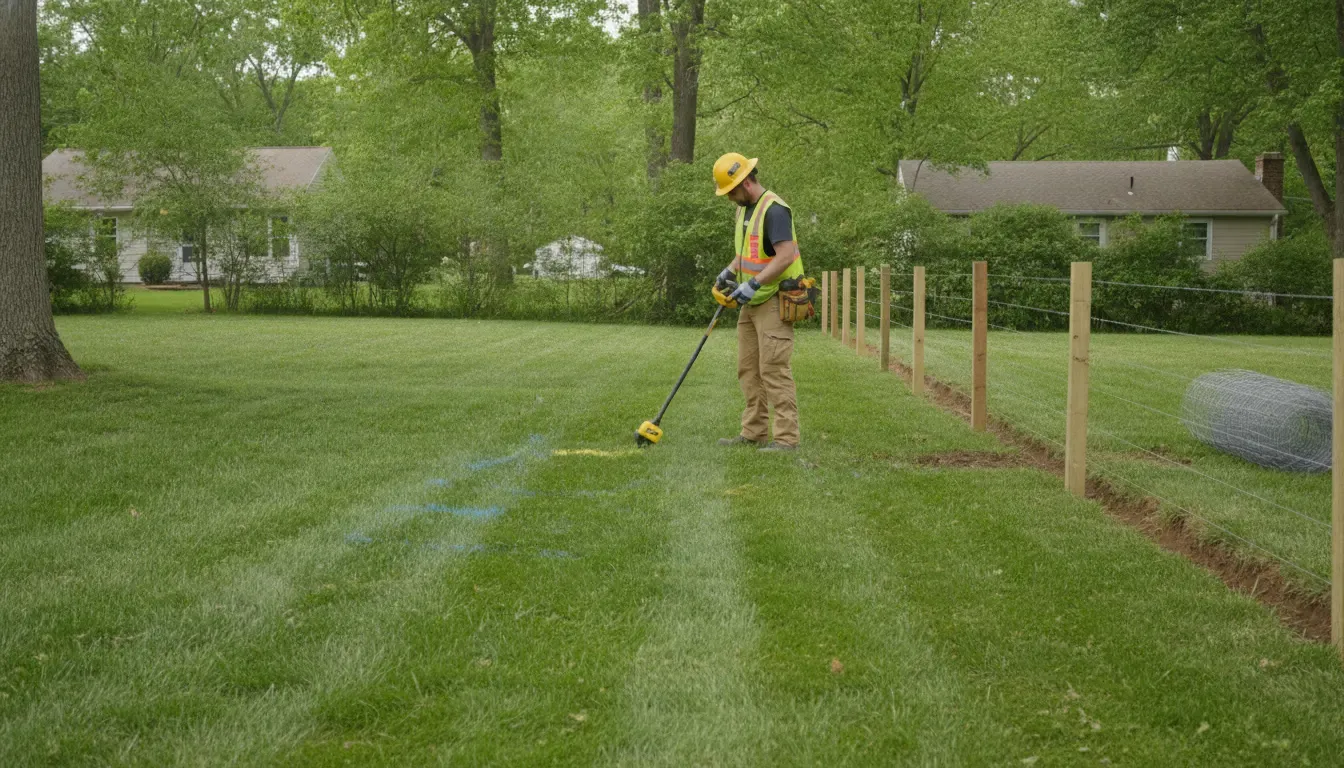
Do I need a private utility locate before digging? In most cases, yes if your project area may contain privately owned lines that 811 does not mark. Call 811 first where required, then consider a private locate for lines serving your home, outbuildings, irrigation, lighting, pool equipment, or other improvements on private property. SafeLine Subsurface can help you decide what your project requires through its private utility locating service planning guide.
Discuss your digging project with SafeLine Subsurface
A clear 811 response does not always mean the entire property is clear to dig. Public utility operators generally mark facilities they own and maintain within their notification responsibility. A private utility locate addresses the remaining question: what privately owned or uncertain infrastructure may be in the planned work area?
What Triggers the Need for a Private Utility Locate?
A private utility locate is warranted when your excavation could cross a line that is outside a public utility operator's marking responsibility. The clearest triggers are work beyond a meter or property boundary, connections to detached structures, incomplete site records, and any project where an unknown line could affect safety, design, or scheduling.
- Your digging area extends from the house to a garage, shed, barn, pool, or other detached structure.
- You are installing a fence, deck, addition, retaining wall, driveway, drainage feature, pool, or landscape improvement.
- You need to cross a yard with irrigation, landscape lighting, an invisible pet fence, or private communications lines.
- A private water, sewer, gas, or electric connection may run through the work area.
- Older plans are missing, incomplete, or inconsistent with what you see at the property.
- The excavation limit changed after the original 811 ticket or after the site plan was prepared.
- You are planning commercial, municipal, development, or utility work where delays and rework carry significant consequences.
If you are unsure whether a line is public or private, uncertainty itself is a sensible reason to ask a professional. SafeLine Subsurface's guide to what 811 does not cover explains the public and private distinction in more detail. This article focuses on the decision to investigate before work begins.
Which Projects Usually Need Private Locating?
Small projects can need a private locate just as much as large construction sites. The deciding factor is not the size of the shovel or the budget. It is whether the planned work could disturb a buried line that is not included in the public marking process.
| Project | Why a private locate may be appropriate |
|---|---|
| Fence posts or landscaping | Posts, trees, and irrigation work can cross private electric, lighting, irrigation, or communication lines. |
| Pool, deck, or patio | The work may cross service lines to the home, pool equipment, outdoor lighting, or other improvements. |
| Trenching to an outbuilding | Private power, water, gas, or communications may run between the main structure and a detached building. |
| Driveway, drainage, or retaining wall | Excavation can affect buried utilities and drainage routes that do not appear in public utility records. |
| Commercial or development work | A broader work area, multiple utility owners, and changing plans increase the value of coordinated private locating and documentation. |
A private locate is especially useful when the proposed work is close to a building, crosses a driveway, follows an older trench, or connects to an improvement that was installed by a prior owner. Familiarity with the property is not a substitute for field information. Lines may have been moved, abandoned, extended, or installed without a complete record. For broader guidance on scoping the work area and preparing records, see SafeLine Subsurface's private utility locating project planning guide.
Is Calling 811 Enough Before Digging?
No. Calling 811 is an essential first step, but it is not a complete substitute for private utility locating. 811 helps notify participating utility operators about planned excavation so the facilities they own and maintain can be marked. Private utilities may remain outside that response. The Virginia 811 explanation of private utilities gives examples such as lines between a water meter and home, lines to detached structures, and other owner-connected facilities.
The exact coverage boundary depends on the utility, property, and applicable local requirements. That is why the safest sequence is to submit the appropriate 811 request, wait for the response required for your project, review the marks, and arrange private locating when privately owned lines may be in the dig area. SafeLine Subsurface does not replace 811. Its role is to help investigate the part of the subsurface that the public response may not address.
Do not treat a ticket marked clear, a lack of visible paint, or a previous project as proof that no utilities are present. A response describes the facilities covered by that response. It does not necessarily certify every buried line on the property.
What Can Happen If You Skip a Private Locate?
Skipping private locating can create more than a repair problem. It can put people at risk, interrupt service, force a crew to stop, damage a finished surface, or require a design change after construction has already started. The outcome depends on the site and the line involved, but the underlying risk is avoidable when unknown utilities are investigated before excavation.
- Utility damage: A private electric, gas, water, sewer, or communication line can be struck without warning.
- Safety exposure: Contact with an energized or pressurized utility can injure workers, residents, or bystanders.
- Project delays: Work may stop while the damaged line, ownership, and repair process are identified.
- Rework: A trench, footing, pool, or fence layout may need to be redesigned around a line discovered too late.
- Incomplete records: A missed utility can remain a problem for the next owner, contractor, or facility team.
Locating is not a guarantee that every buried object will be detected. It is a risk-reduction step that gives the project team better information before the ground is disturbed. The scope should match the work area, surface conditions, suspected utilities, access, and decisions the project needs to make.
Request a private utility locating consultation before your crew digs
How Does a Private Utility Locate Find Buried Lines?
SafeLine Subsurface selects locating methods based on the suspected utility, material, surface, access, soil conditions, and project question. Electromagnetic, or EM, locating can help trace conductive lines and connected systems. Ground penetrating radar, or GPR, can provide additional information about non-metallic utilities and subsurface changes where site conditions allow. Using the methods together can give the field team a stronger basis for interpreting the site.
EM locating and GPR answer different questions. EM equipment responds to electromagnetic fields associated with conductive utilities or an applied signal. GPR sends radar energy into the ground and interprets reflections from buried objects, interfaces, and changes in material. Neither method should be presented as a promise of perfect detection in every soil or surface condition. SafeLine's GPR utility locating guide explains where GPR fits and why EM and GPR can work together.
For a simple residential project, the useful result may be field marks and practical guidance for the planned work area. Commercial or engineering projects may also need photos, mapping, written notes, or other documentation. The deliverable should be agreed before the visit rather than assumed afterward.
How Do I Schedule a Private Utility Locate Before Digging?
Schedule the private locate early enough for the field information to influence the work plan. Give the locator the proposed excavation area, project type, preferred timing, known utilities, site plans, and access instructions. If the design or work limits change, update the scope and ask whether another review is needed.
- Mark the proposed work area: Identify where the fence, trench, footing, pool, or other disturbance will occur.
- Complete the public notification step: Call 811 or use the applicable state system where required. Private locating is an additional step, not a replacement.
- Gather useful records: Share site plans, prior mark-outs, utility drawings, service locations, and information about detached structures.
- Describe the decision: Explain whether you need to set marks, plan excavation, confirm a route, protect a facility, or create a lasting map.
- Keep the scope current: Revisit the locate if the excavation area expands or the project moves to a different part of the property.
SafeLine Subsurface serves projects across Virginia, Maryland, Washington, D.C., and North Carolina, with emergency locating support available for time-sensitive needs. Contact the team before scheduling work so the requested service matches the site and project question.
Contact SafeLine Subsurface to plan your locate
What Happens During a Private Locate Appointment?
A private locate appointment typically begins with a review of the work area and the question the project needs answered. The technician then evaluates site access and conditions, uses appropriate equipment such as an EM locator or GPR system, and communicates relevant indications through marks or documentation agreed in the scope. The result supports planning, but it does not transfer safe-digging responsibility from the property owner or excavator.
Before the appointment, remove avoidable access obstacles and make the excavation limits clear. Tell the locator about known service entrances, outbuildings, wells, septic-related infrastructure, irrigation controls, previous repairs, and areas that cannot be disturbed. Accurate context helps the field team interpret what it finds and explain limitations honestly.
Frequently Asked Questions About Private Locates Before Digging
Do homeowners need a private utility locate?
Homeowners should consider a private locate whenever a project may cross privately owned utilities, especially for fences, pools, decks, landscaping, additions, drainage, or work to detached buildings. When you are not sure what is buried, asking a locator before digging is safer than relying on memory or visible features.
Should I call 811 if I also schedule a private locate?
Yes. A private utility locate complements the public 811 process and does not replace it. Follow the notification process that applies to your project and location, then arrange private locating for lines that may fall outside the public utility response.
What private utilities may need to be located?
Examples include water or sewer laterals, electric lines to a garage or shed, gas lines serving an outdoor appliance, irrigation, landscape lighting, invisible pet fences, and private communications lines. The likely utilities depend on the property's improvements and history, so share those details during project intake.
Can a private locate tell me exactly how deep a utility is?
Ask about depth information when you define the scope, but do not assume that a mark provides a guaranteed depth or exact exposure point. Soil, signal conditions, surface access, utility material, and site changes affect what can be detected. Follow applicable tolerance-zone and exposure practices before excavation.
When should I schedule the locate?
Schedule it before the excavation layout is finalized and before work begins. Early locating gives the owner, designer, and crew time to adjust the route or work sequence. If the dig area changes, contact the locator to confirm whether the original scope still applies.
The Bottom Line
If your project involves digging on private property and a buried line could change the safety or layout of the work, a private utility locate is a prudent next step. Call 811 where required, identify the private-locate triggers, and give SafeLine Subsurface enough project context to recommend an appropriate investigation. Better information before digging can help your project avoid preventable surprises.